
Best Time for Safaris in Kenya’s Maasai Mara National Reserve
With its extensive open savannah and abundant wildlife, the Maasai Mara National Park is one of Africa’s premier safari locales. The park, located in southwestern Kenya and bordering the Serengeti National Park of Tanzania to form the broader Mara-Serengeti Ecosystem, features dramatic views of the skies and an unforgettable safari experience.
When planning a trip to the Maasai Mara, tourists frequently inquire about when would be the optimum time to visit. While there are many variations throughout the year, the Maasai Mara will always provide visitors with some amazing safari opportunities. Each time of year has its own unique offer: an atmosphere, migration of various types of animals, and different types of landscapes.
In this guide, you’ll discover which time(s) of year are best for visiting the Maasai Mara National Park for Safari excursions, what wildlife you’ll see most readily at that time, and how to calculate your safari itinerary according to your personal preferences.
Understanding the Maasai Mara Climate
A good understanding of the climate at the Maasai Mara will help you choose the best time to visit.
Due to its elevation, the Maasai Mara generally has a mild climate throughout the year. Days can be quite warm, while nights can feel cool due to the dropping temperatures early in the morning and late into the evenings.
The year is divided into two types of seasons. There are two dry months followed by four rainy months, with the pattern thus disrupted by climate change and the effects it has on the level of rainfall.
Dry Months
- January to March
- July to October
Rainy Months
- April to June
- November to December
The different types of months allow for different types of safari experiences.
July to October: Peak Safari Season and the Great Migration
If you are travelling to the Maasai Mara, July to October is when you are most likely to see the greatest number of visitors.
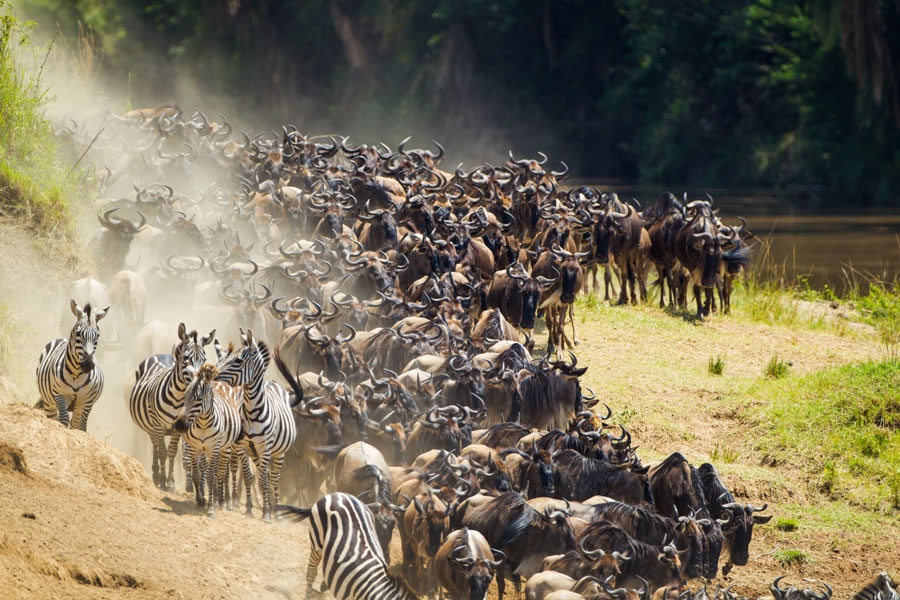
The Great Migration of the Wildebeests
From July through October, approximately 2 million wildebeests, zebra, and other ungulates migrate from the Serengeti Plains in Tanzania to the Maasai Mara in Kenya in search of fresh grasslands. The migration of wildebeests and other ungulates from the Serengeti to the Mara is known as “The Great Migration.”
The Great Migration usually culminates with dramatic river crossings at the Mara River. Many animals form large herds at the banks of the Mara River, with Crocodiles lurking just under the water waiting to catch unsuspecting animals swimming across. This event can be very exciting and should not be missed.
Wildlife Viewing Opportunities
Even if you are not able to witness the migration, the wildlife viewing opportunities at this time of year will be extensive due to the open landscapes and shorter grass, which allow you to see animals easily. Predators are usually very active and will be hunting for prey.
There is also a very good chance of seeing the following:
- Cheetahs and lions hunting for food
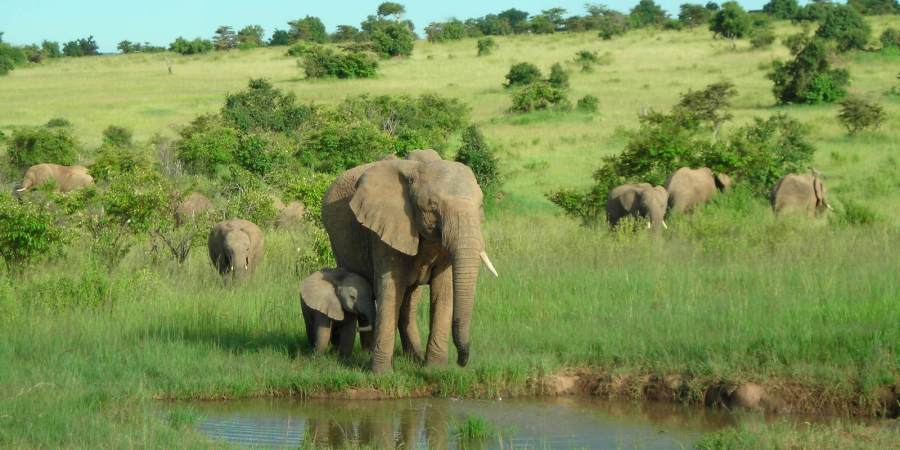
- Large herds of elephants and buffaloes
- Leopards resting in trees
- Hyenas trailing the migrating herds of wildebeests
Weather during This Time of Year
During this period of the year, you can generally expect sunny, clear, dry days with little to no rain. In addition, the roads in the Maasai Mara are in excellent condition, and you can easily drive through the park without too much difficulty.
Reasons To Visit At This Time
- Best opportunity to witness the Great Migration
- Outstanding opportunities to view predator action
- Clear skies and stunning views of the setting sun.
This is the time of year when a large number of tourists come to the Maasai Mara to view the spectacular wildlife and to participate in this outstanding wildlife viewing experience.
January to March: Warm, Dry, and Wildlife-Rich
January through March is a great time of year for viewing animals in the Maasai Mara.
Wildlife Viewing
At this time, the herds that move between Tanzania and Kenya are gone. However, there are still some animals that live in this area. The big 5 (lion, leopard, elephant, buffalo, rhino) are all available to view, and the antelopes are also found in the Maasai Mara year-round.
The chance to see predator animals will be much greater during this time of year than during any other, when grasses have grown tall and cover the animals.
Bird watching is also very good at this time of year due to the number of migratory birds from Europe and Asia. These birds create a wonderful, colorful display in the area.
Weather
The weather is warm, sunny, and typically without any rain. Sometimes there is a very short rain shower that may not affect your traveling plans.
Why Visit
- A great opportunity to see a lot of wildlife with very few visitors.
- Exceptional bird watching.
- Pleasant weather.
- Great photo opportunities.
Travelers who are looking for a relaxing and rewarding wildlife experience should consider this period!
April to June: The Green Season
April-June is called the “Green Season” in the Maasai Mara reserve.
Landscape Transformation
During these months, the Maasai Mara reserve experiences a transformation into an incredibly lush, green, vegetative paradise; grasses covering the landscape in great abundance, trees that fill out and produce their vibrant colors, creating dramatic and beautiful scenery.
Wildlife Activity
Although animals remain in the area, the abundant supply of Water allows wildlife to be spread more widely. Therefore, wildlife viewing will require a bit more patience, but the rewards of viewing animals are worth the wait.
This time of year is also the calving period for many species of animals. The sight of all the newly born antelopes and wildebeests is a prime target for many predators, causing excitement as wildlife encounters happen all the time.
Birdwatching
The sheer abundance of birdlife during this period is unmatched. Wetlands and rivers provide an additional attraction for both resident and migratory bird species.
Weather Conditions
Rainfalls are generally heavier in April and May. Roads can become Muddy but rainfalls are generally of shorter duration rather than long continuations.
The reasons for visiting during the Green Season Timeframe include:
- Beautiful and lush green scenery
- Less vehicle traffic during the game drive
- Very Dramatic skies during the time of year, great for photography
- Abundance of birds
The Green Season Timeframe is a Magical Time to be in the Maasai Mara reserve for Nature Lovers and Photographers.
November to December: Short Rains and Fresh Scenery
From November to December, short rains occur, and the land is nourished for fresh growth.
Wildlife Viewing Opportunities
During this short rainy period, the animals have enough water and forage for food. Rivers will fill up with rainwater, wildlife will continue to be active, and the animals will be in their healthiest condition.
Predators will be out hunting, particularly during the early mornings and late afternoons.
Weather Conditions
Rainy months will be characterised by lower amounts of rainfall than the wet season months and will have lower levels of prediction; however, if rain does fall during this period, it usually has an associated favourably sunny period immediately following.
Why should I visit during this time?
- Greener, fresher scenery.
- High volumes of active wildlife.
- Fewer tourists.
- Moderate climate conditions.
These conditions are an example of the best overall safari experience available, where you can be overlooking beautiful landscapes and experiencing wildlife in the way it should be seen.
The Most Likely Time to See a Large Number of Big Cats
The Maasai Mara is one of the best places in Africa for seeing the largest number of big cats in any given year.
Lions
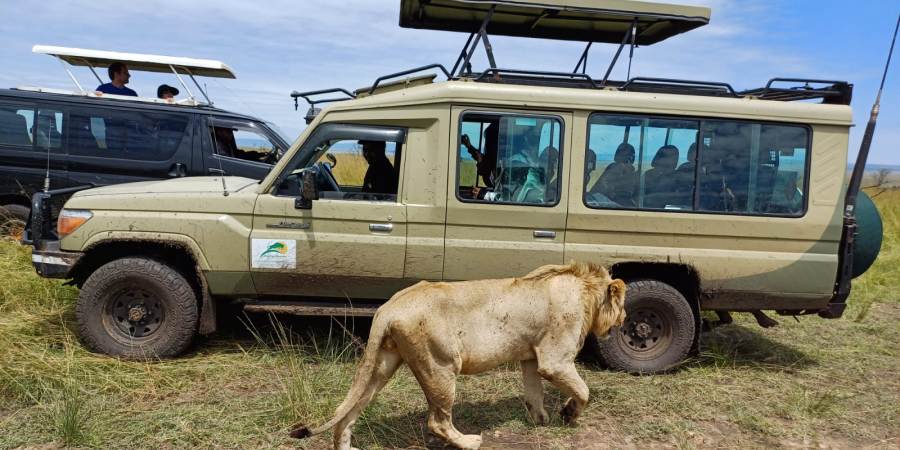
Throughout the year, Lions are commonly found in the area and can be easily spotted during dry seasons when grasses are relatively low.
Cheetahs
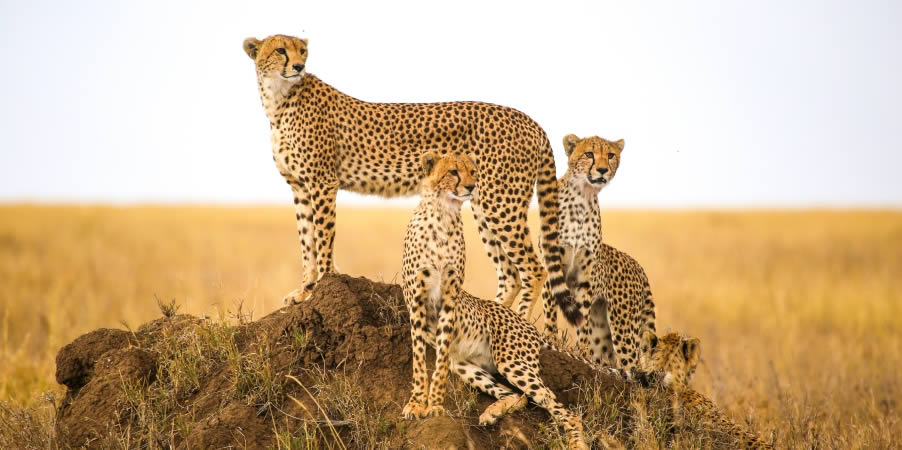
The majority of Cheetahs are found on open plains where they regularly hunt in the early morning and late afternoon hours, particularly during dry months.
Leopards
Leopards are extremely shy and tend to spend most of their time resting in trees, particularly near rivers, and are easily seen year-round.
While Big Cats are always present, dry months provide the best opportunity for viewing these animals.
Best Time for Birdwatching
All bird watchers will enjoy the Maasai Mara at any time of year, but some months are specifically recommended for bird watching.
Birdwatching Season
The birdwatching season is between November and April because this is when migratory birds arrive, bringing the total to over 450 different types of birds that are already in the area.
Possible sightings include:
- Lilac-breasted rollers
- Secretary Birds
- Martial Eagles
- Vultures and Storks
Any one of these birds may be seen during the wetter months following the rains when a lot of insects are around.
Best Time for Photography
Photography opportunities exist all year long; however, seasons will provide different feelings for the type of photography taking place.
Dry Season Photography
- Clear blue skies
- Golden grasses
- Dramatic Dust Trails
- Clean Wildlife Silhouettes
Green Season Photography
- Deep Green Nature Landscape
- Reflections in Water Pools
- Dramatic Clouds
- Soft Sunlight
Photographers typically have a preference for using the green season for photographs with artistry and the dry season for classic safari photography.
Best Time for Cultural Experience
Culturally, the Maasai have lived in the area of the reserve year-round. Visits to a Maasai village can be done any time of year, but visiting a village during the dry months is easier due to the road conditions. When visiting a village, learn about Maasai traditions and how they coexist with wildlife.
Safari Activities Available Year-Round
Although the Maasai Mara has activities to enjoy no matter what time of year you visit, there are many more activities offered.
- Game drives in the morning and afternoon (Day/Night)
- Nature walks with a guide in the conservancies.
- Hot air ballooning over the Savanna.
- Watching the sunset in the Savanna.
- Culturally visiting Maasai villages.
Each season provides its own uniqueness to these activities.
The Best Time for You Depending on Your Interests
For the greatest diversity in Wildlife Action.
- Best between July and October.
To enjoy peaceful and truly diverse wildlife viewing.
- Best between January and March.
To see vibrant green landscapes and obtain beautiful photographs.
- To take incredible scenery home with you, and to do balanced safaris mid-November to mid-December.
Final Thoughts
Maasai Mara National Reserve provides wonderful experiences year after year, with specific months designated as being ideal for particular events such as the Great Migration in July to September, although there is still an abundance of wildlife and natural beauty to explore year-round.
The yearly cycle presents visitors with an entirely new experience every couple of months. Dry months offer stunning views without the obstruction of rain, plus it’s usually during dry months that animals exhibit their most dramatic behaviours. The rainy season gives you plenty of life and colour, while also providing you with tranquillity.
When you answer the question on what the best time for safaris in the Maasai Mara National Reserve would be, it’s entirely based on your interests. Regardless of your choice of date to visit the Mara, you will no doubt come away with memories of incredible experiences and breathtaking scenes; therefore, you’ll have an experience that will stay in your mind for the rest of your life.
Whether you are watching lions at dawn, listening to wildlife roar as the sun sets over a never-ending plain, or just enjoying the beauty of the intricate ecosystem of the Maasai Mara, the Mara welcomes you during every season.